Scope
Content, creators, contracts and budgets. Usually four tools, held together by one overworked team.

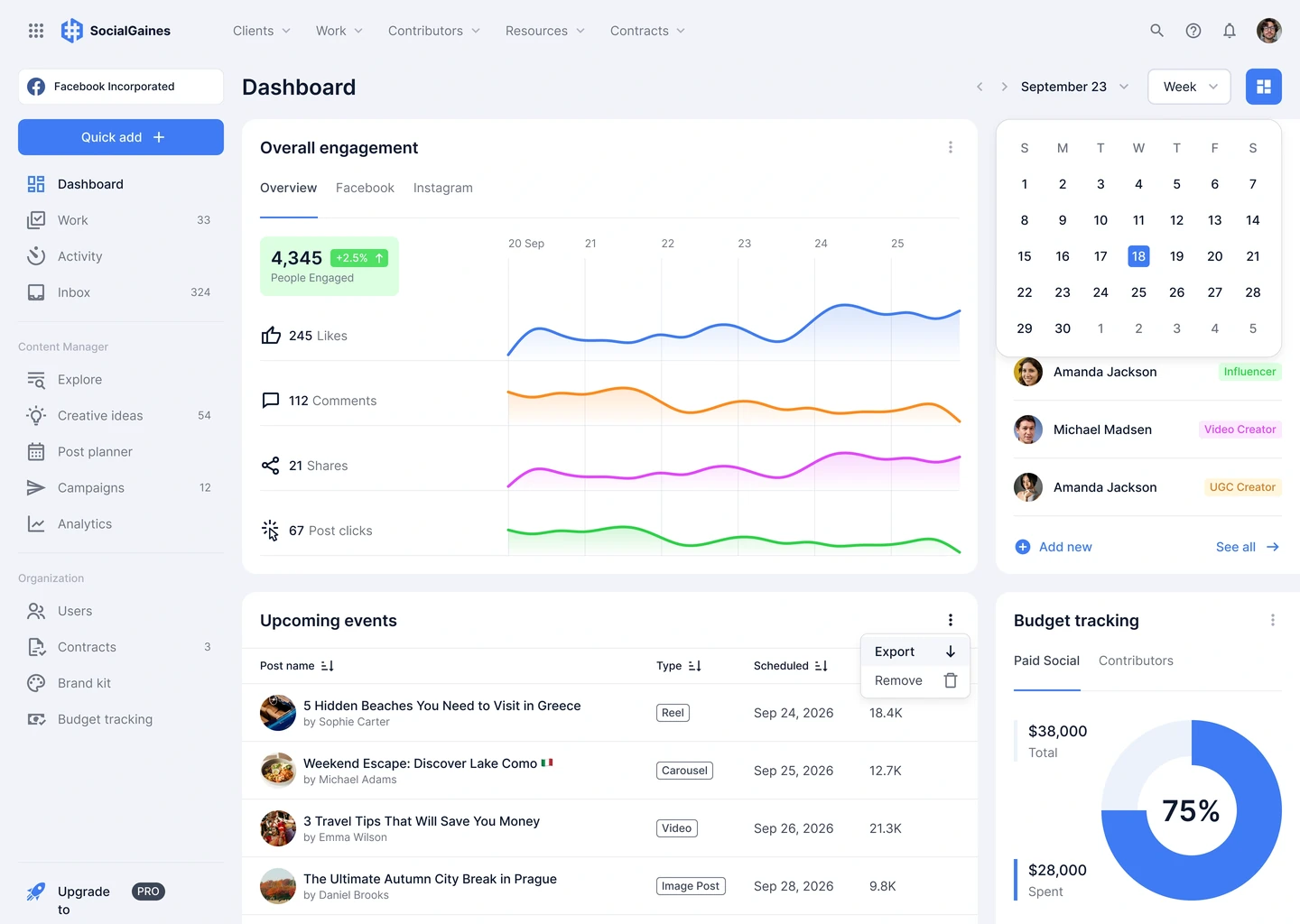
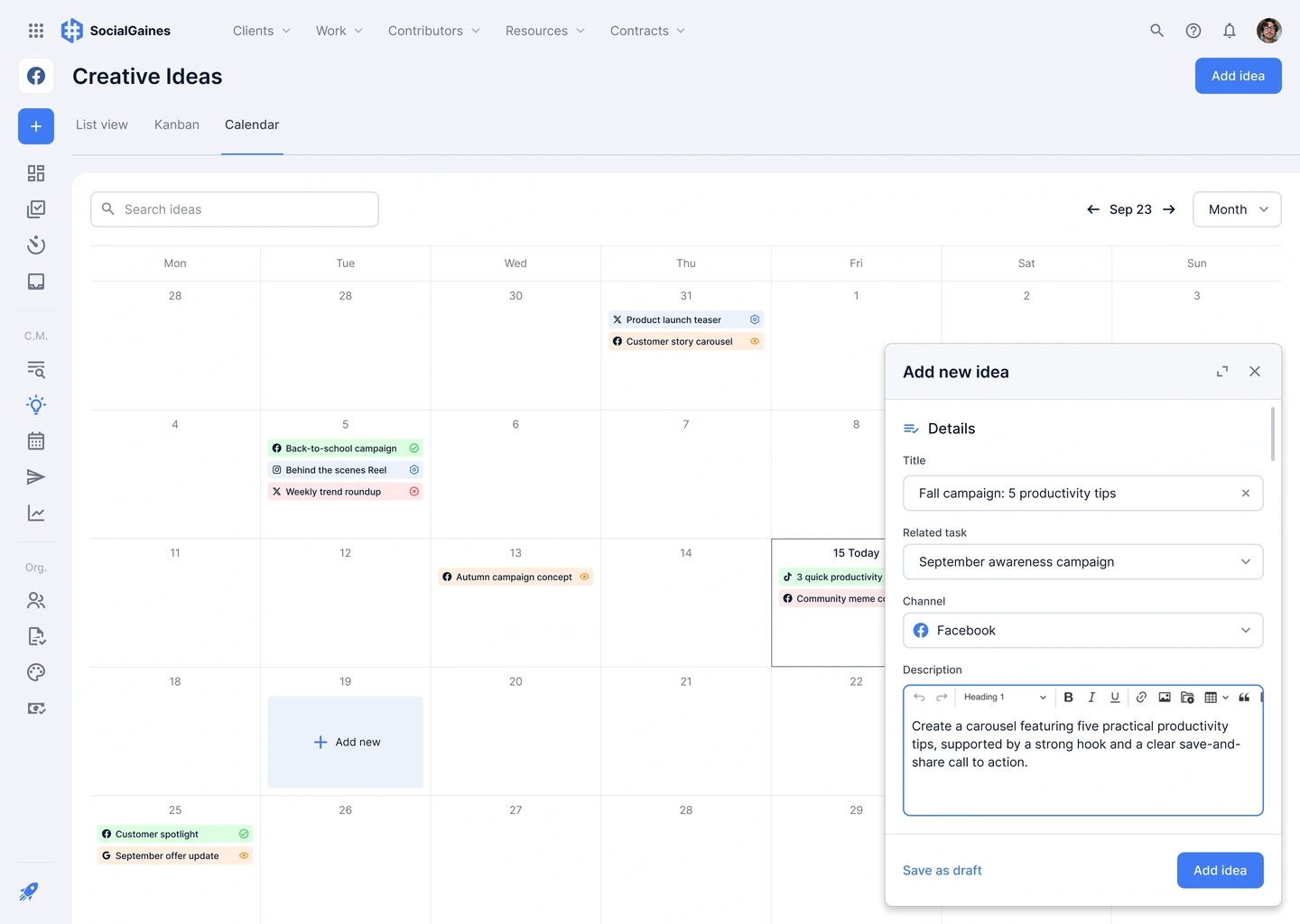
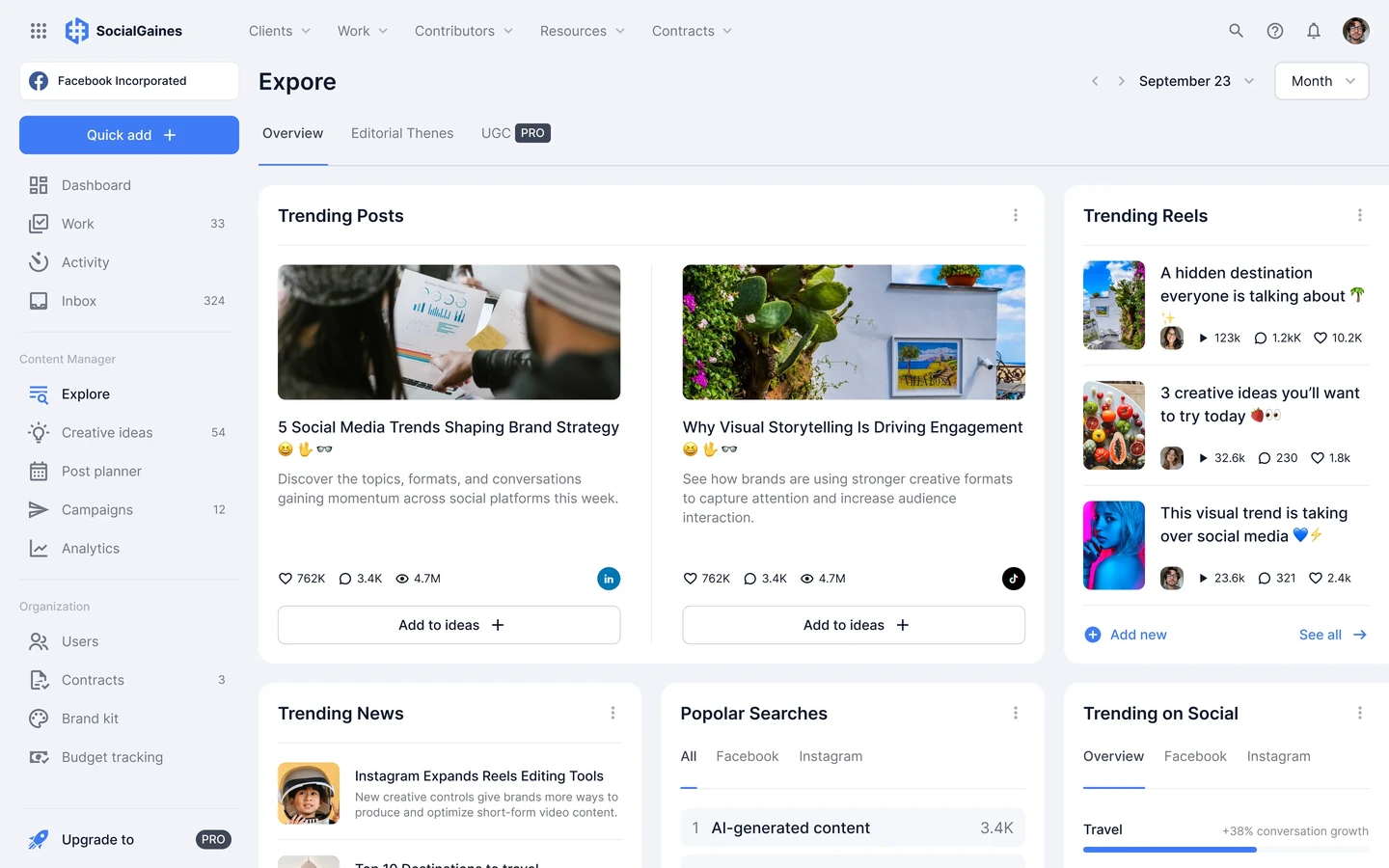
I designed SocialGaines from research to visual design, bringing content planning, creators, contracts and budgets into one workspace. Shared components and implementation-ready tokens connected the product’s UX with development.
The challenge
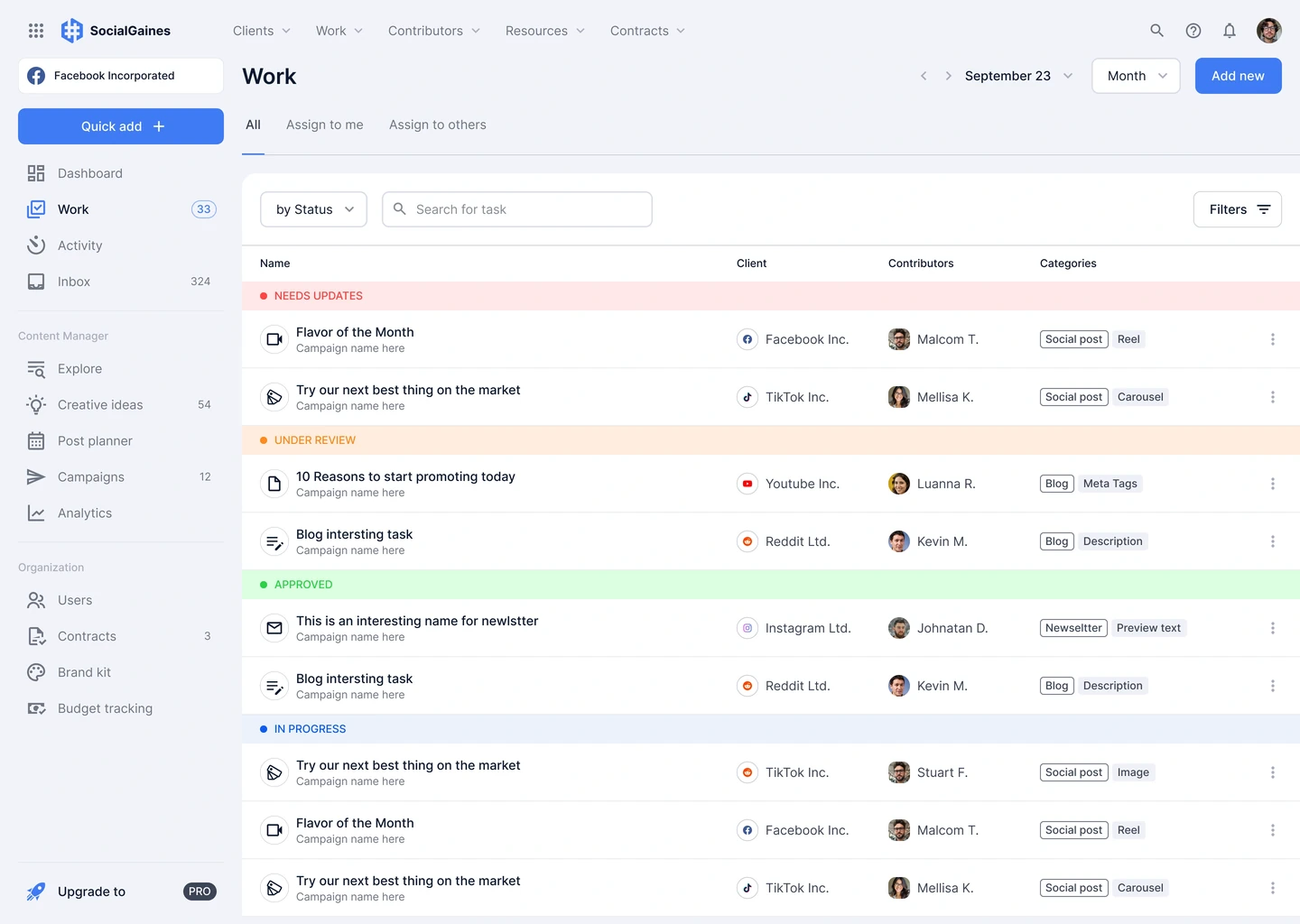
Agency work was spread across spreadsheets, messages and shared documents. The product needed to connect those handoffs, make approvals visible and help account managers understand campaign performance alongside budget and creator activity.
Content, creators, contracts and budgets. Usually four tools, held together by one overworked team.
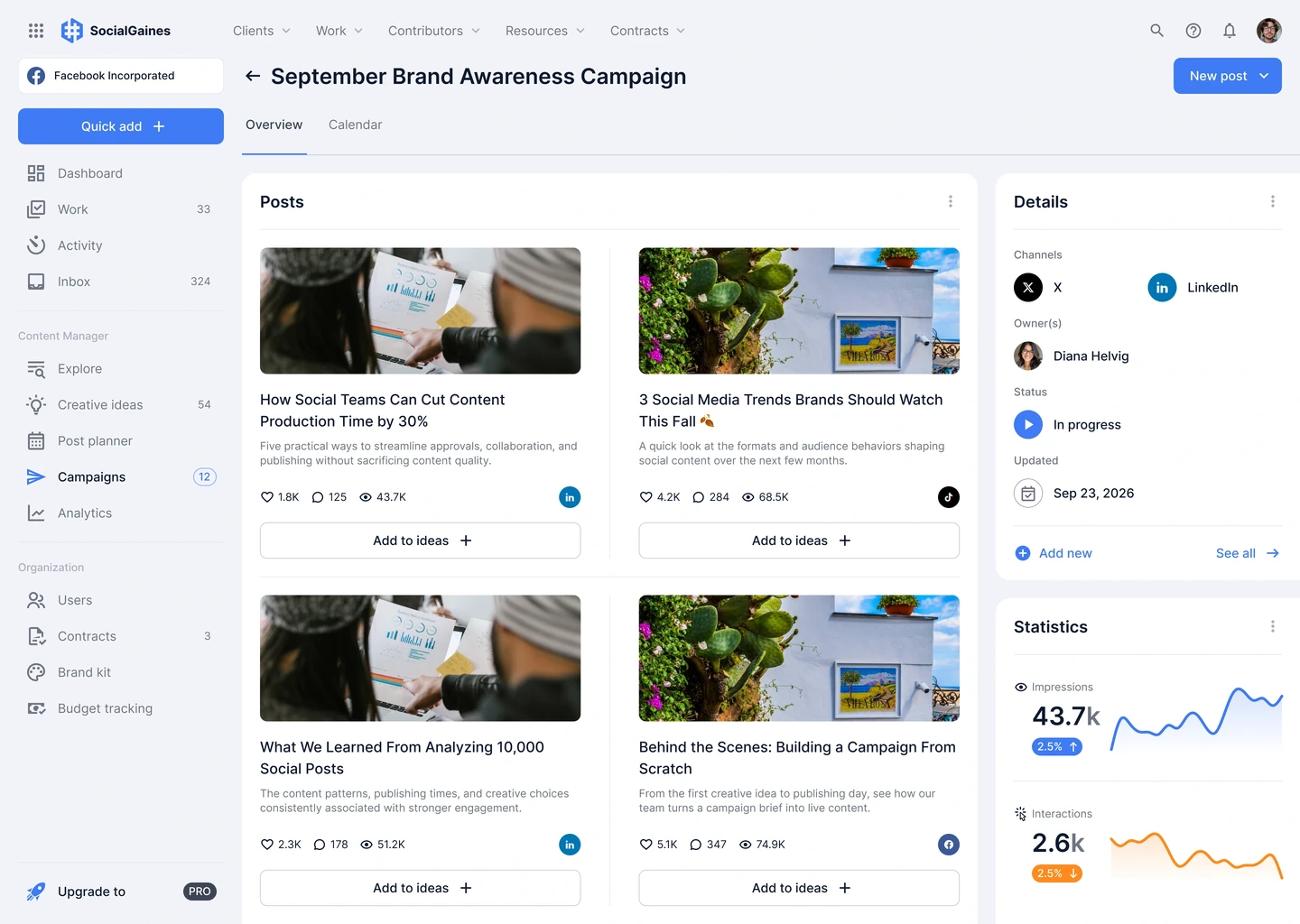
Raw campaign data tells you what happened. It does not tell you what to do next.
A platform the whole team opens first thing every morning, not just another tab they slowly learn to ignore.
Process
I started with how account managers worked, then mapped the journeys, tested the structure and created a system developers could implement consistently.
Interviewed account managers and mapped work across spreadsheets, messages and shared documents. Synthesised sessions in Dovetail to identify recurring handoffs and missing context.
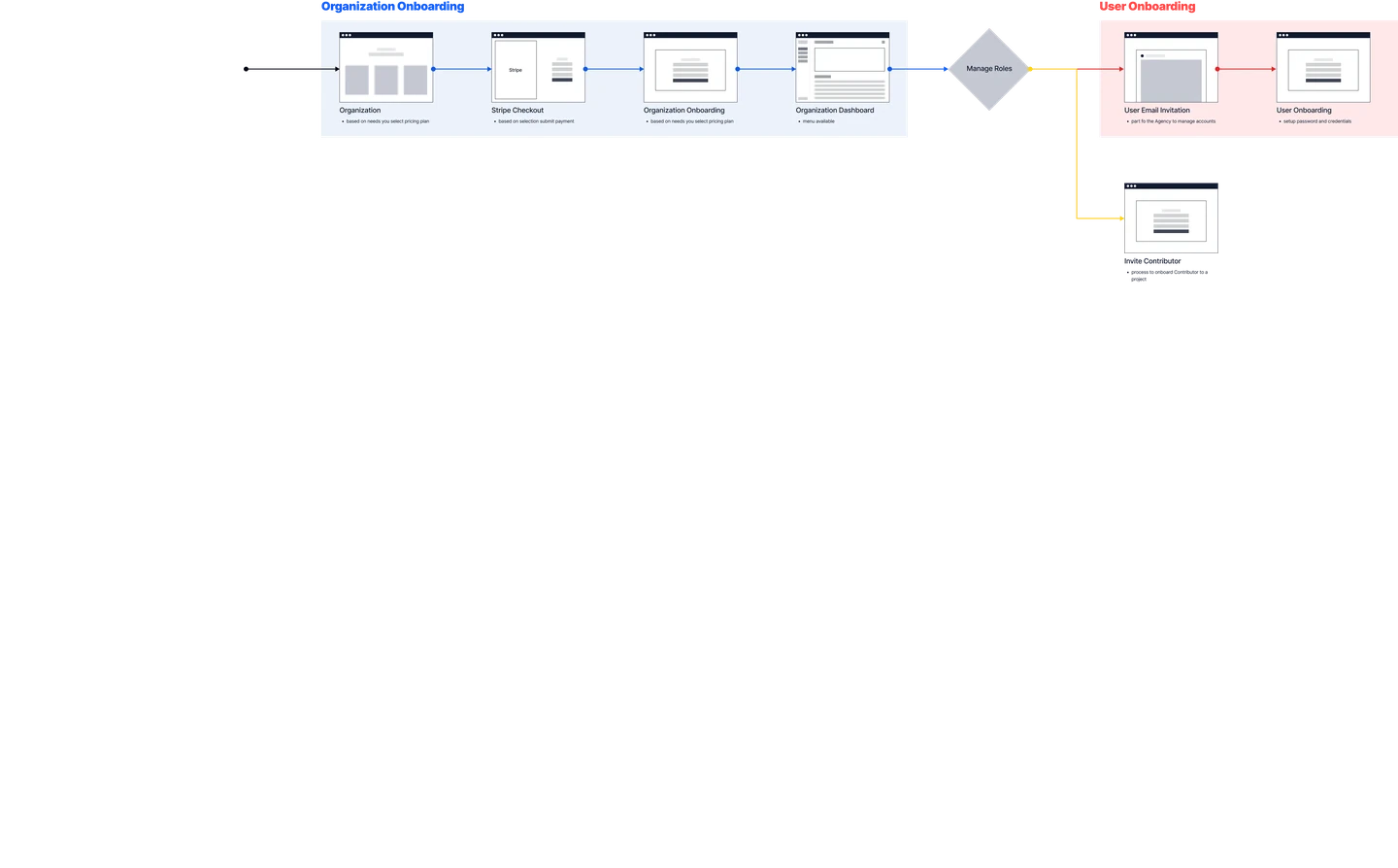
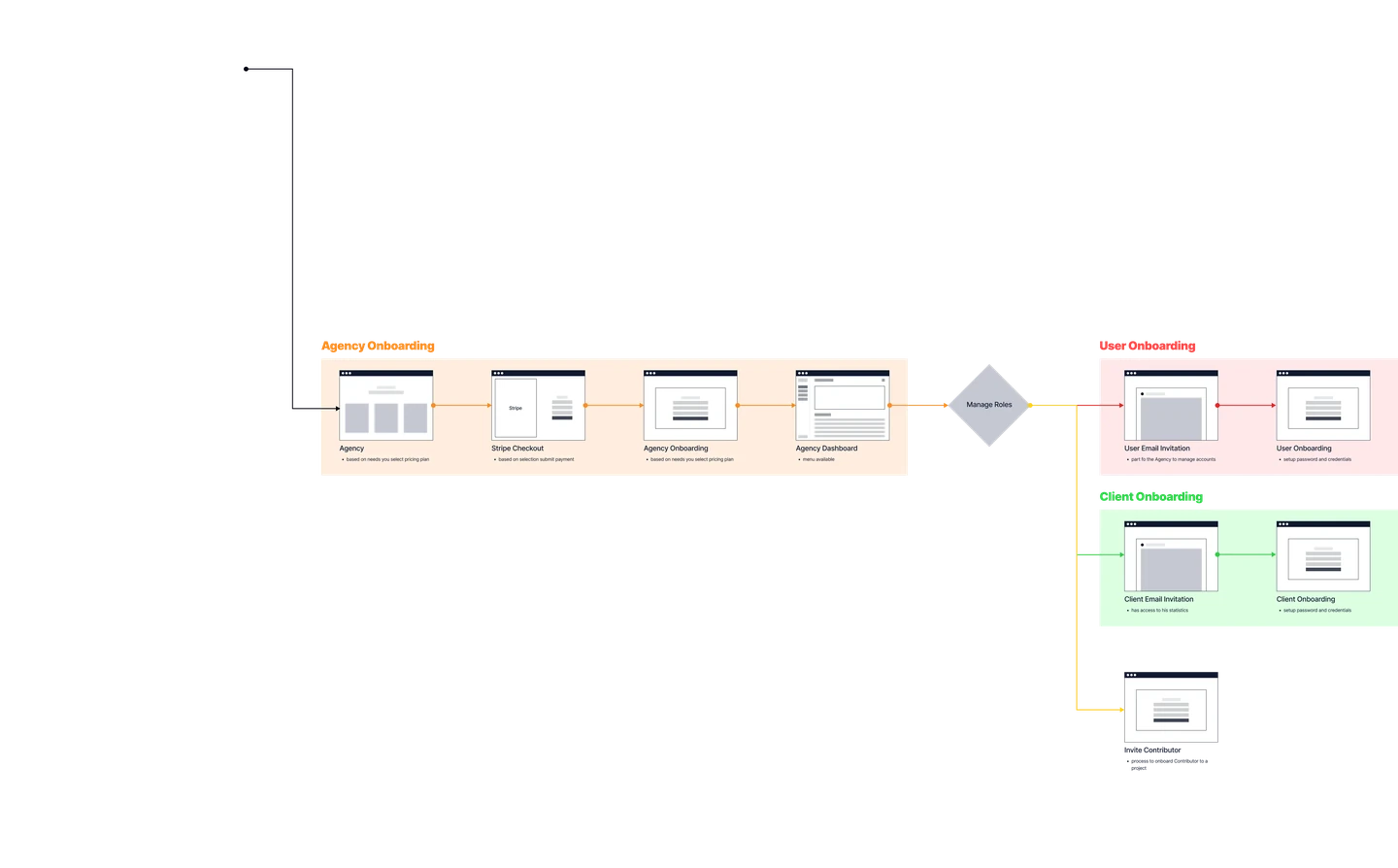
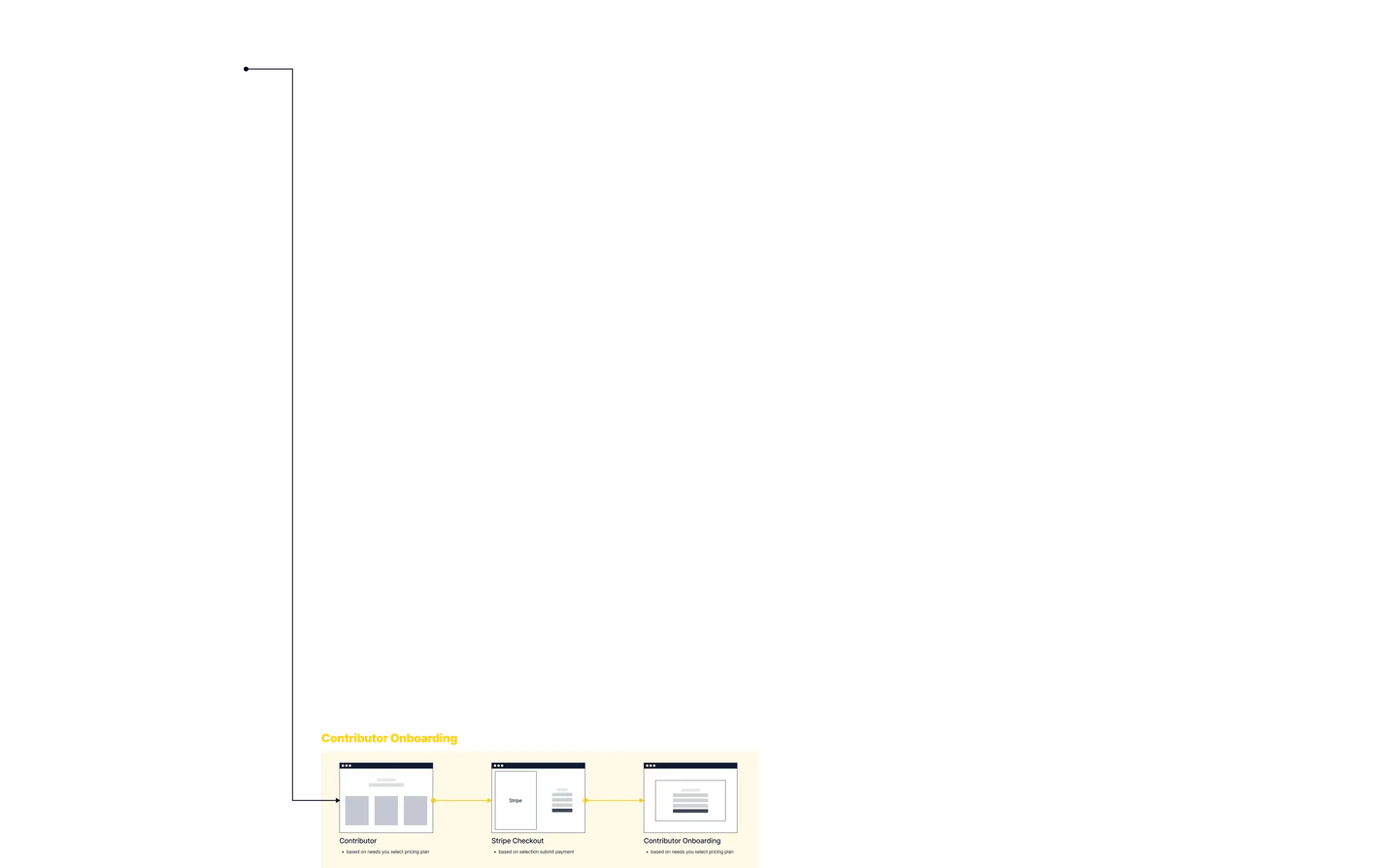
Mapped content, creator, contract and budget flows in FigJam. Tracing the full journey helped define module boundaries and the information each handoff needed.
Structured the modules in Figma and tested flows with account managers using Maze. Feedback shaped the dashboard before visual design.
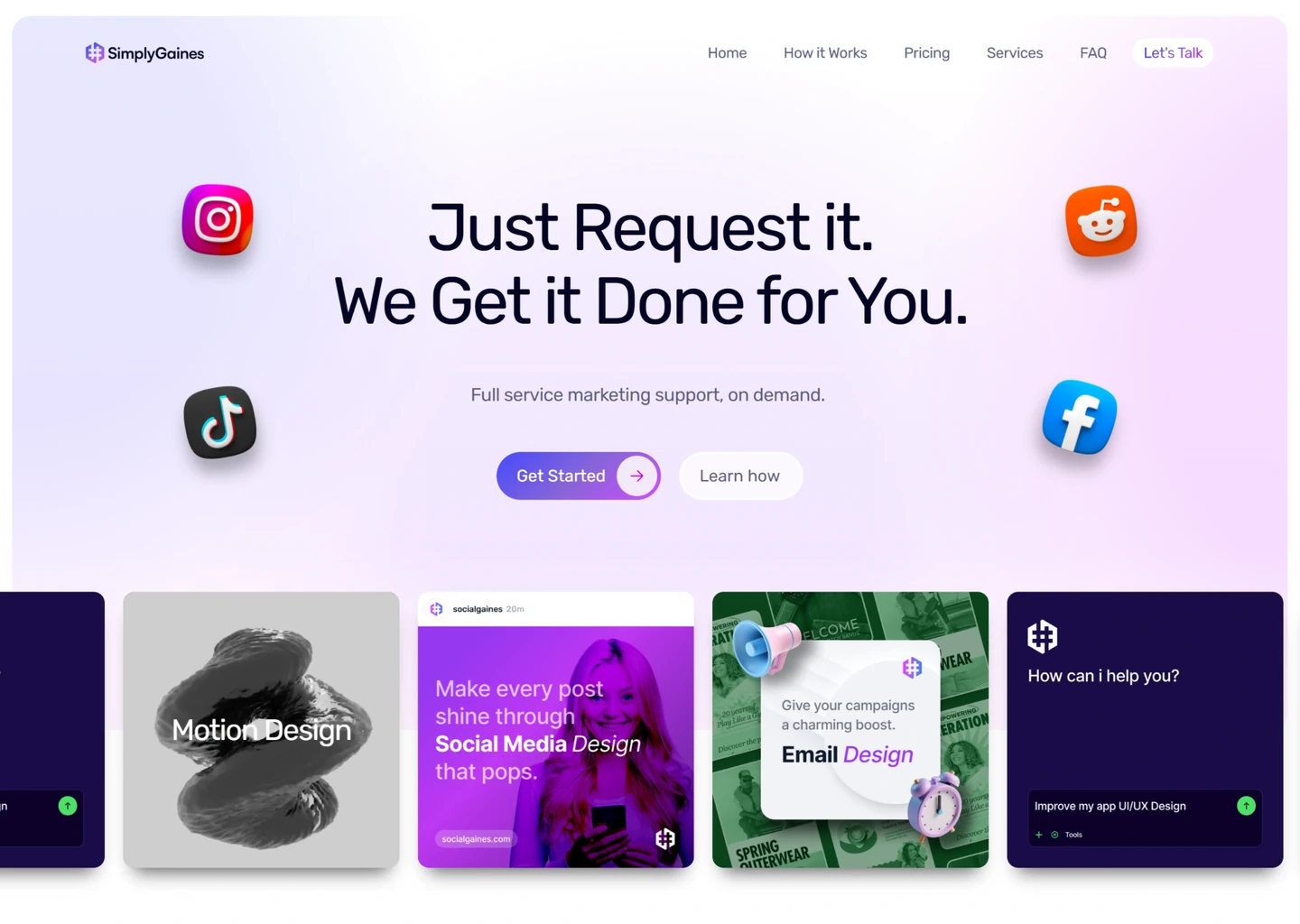
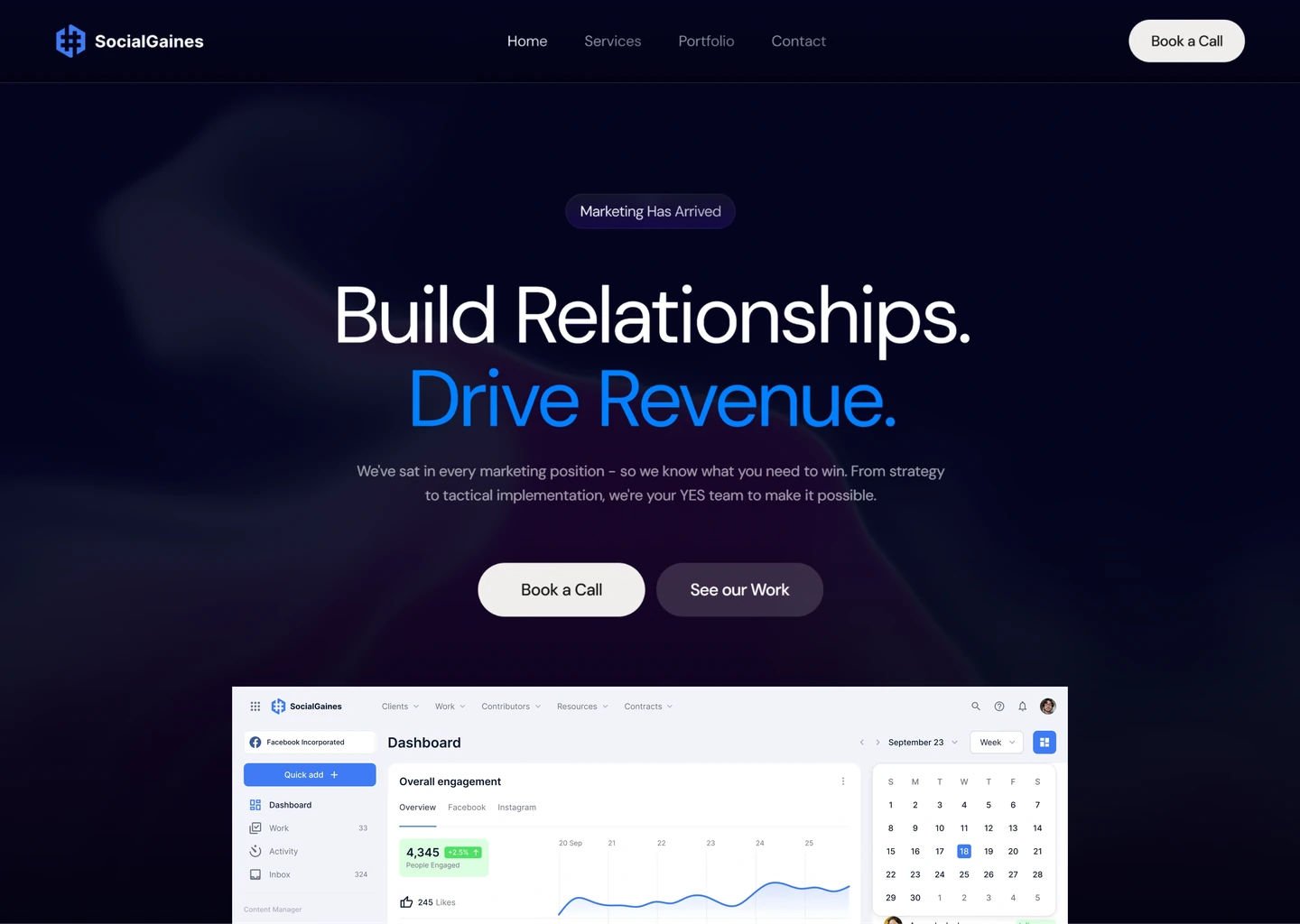
Created shared UI components in Figma with variables mapped to Tailwind CSS tokens. I also designed and shipped the products’ marketing sites in Framer.
Key decisions
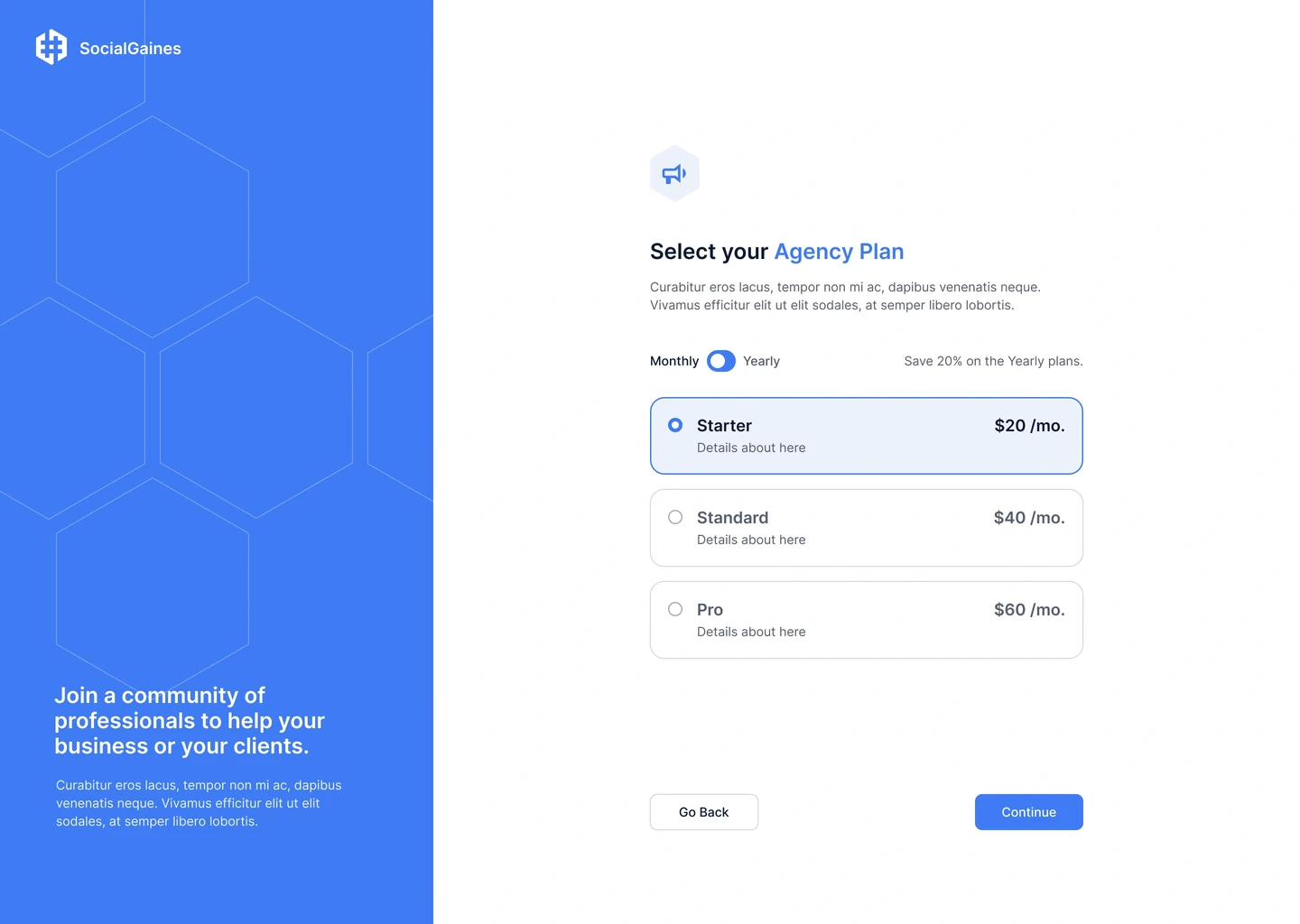
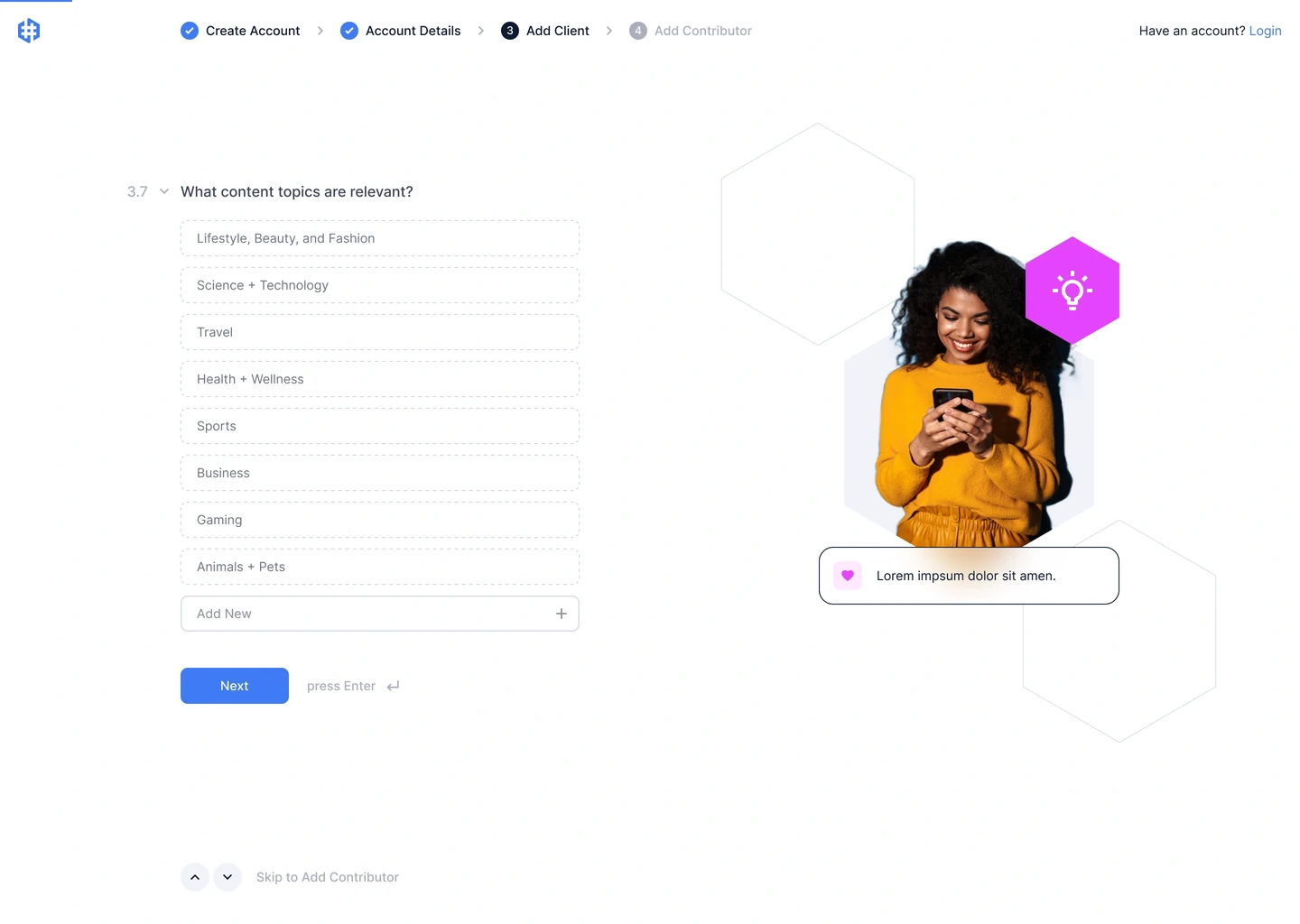
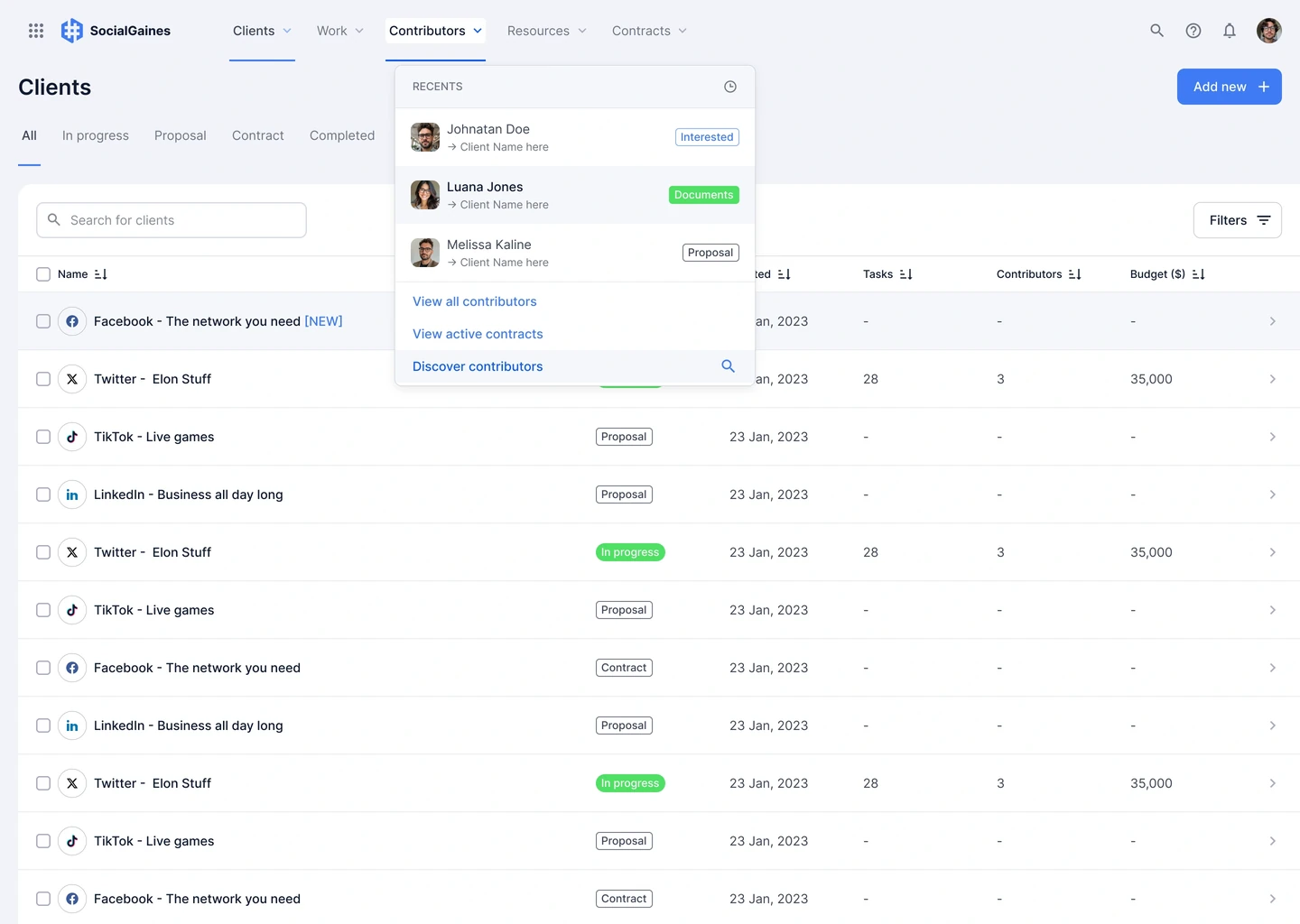
I connected product strategy, research, UX flows and a shared design system across the suite. The work focused on clear handoffs between content, people and budgets, with reusable components ready for implementation.
Mapped the real workflow in UX flows, content through creators through contracts through budget, before designing a screen. Fitting the existing workflow means inheriting its habits, including the ones worth breaking.
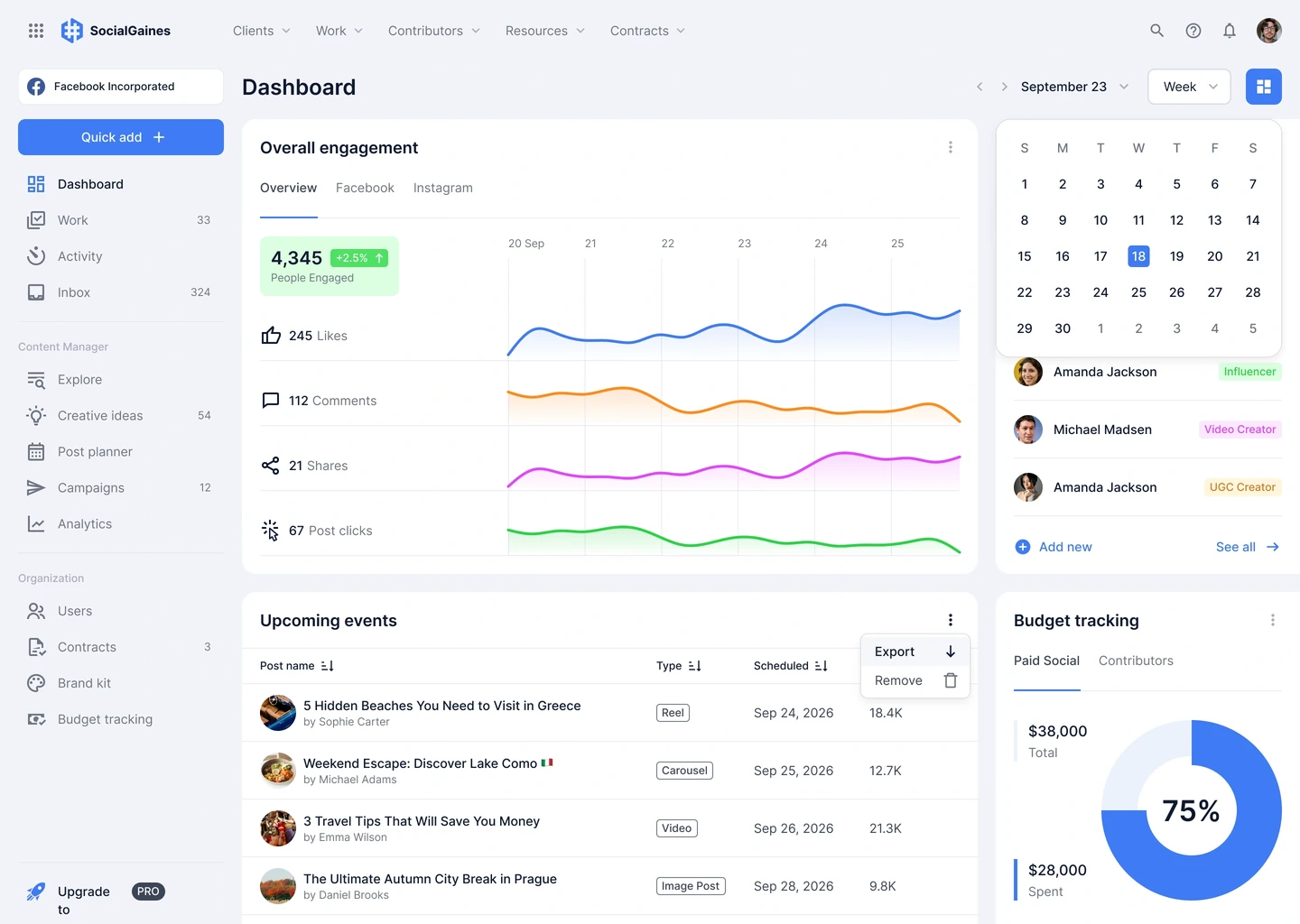
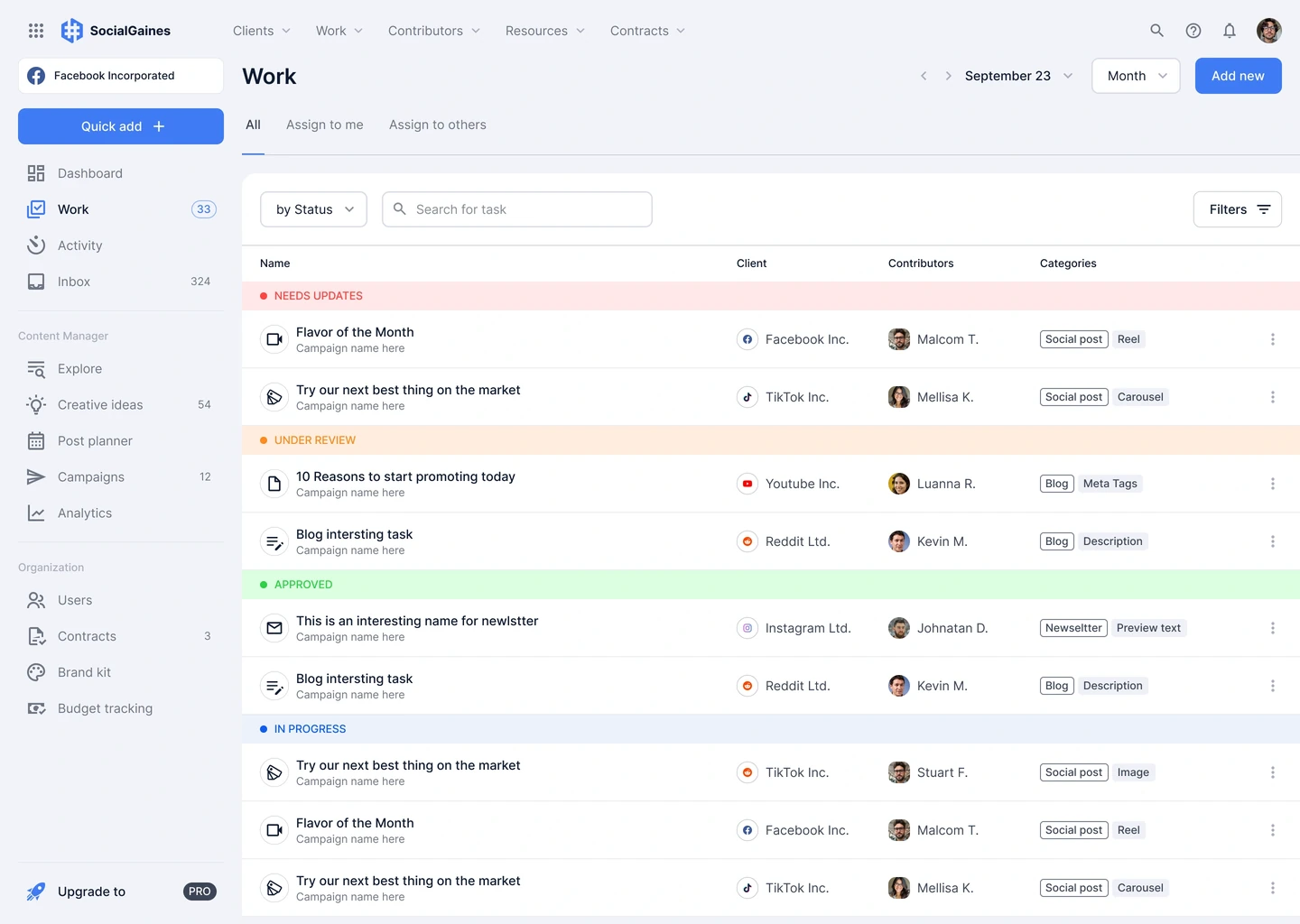
Engagement trends and budget burn surfaced as next actions, so a glance answers what do I do now rather than what happened. Opinionated defaults help most people and get in the way of the analyst who wanted the raw table.
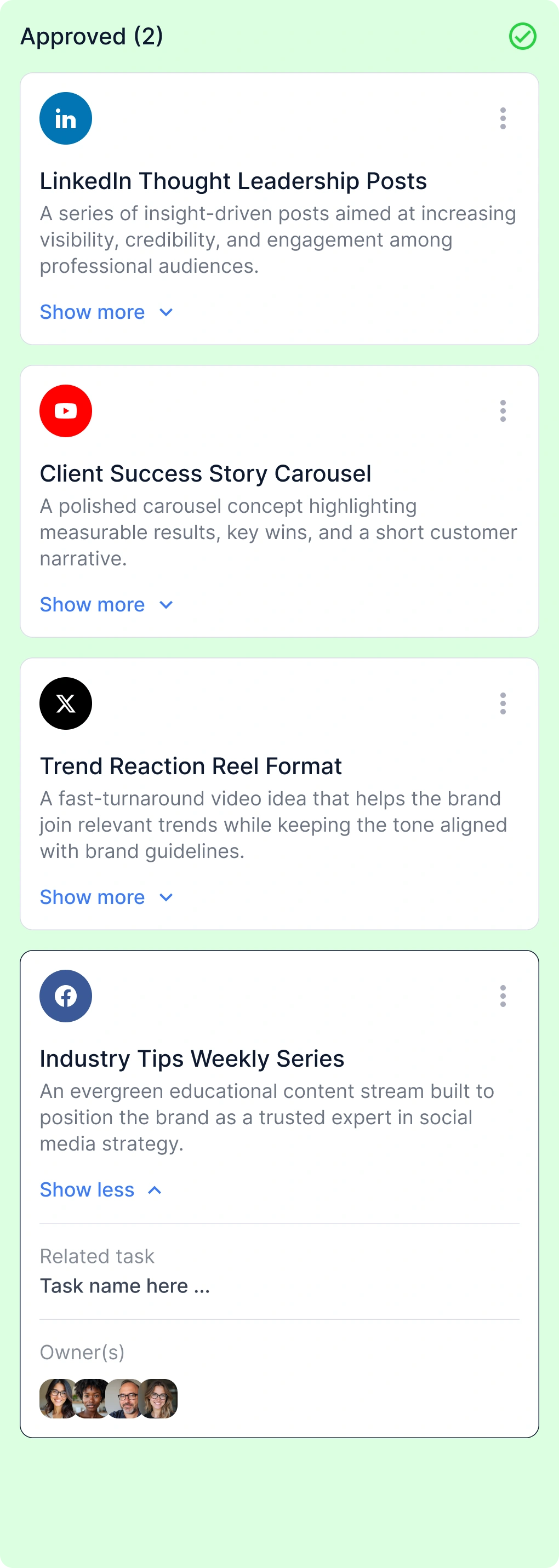
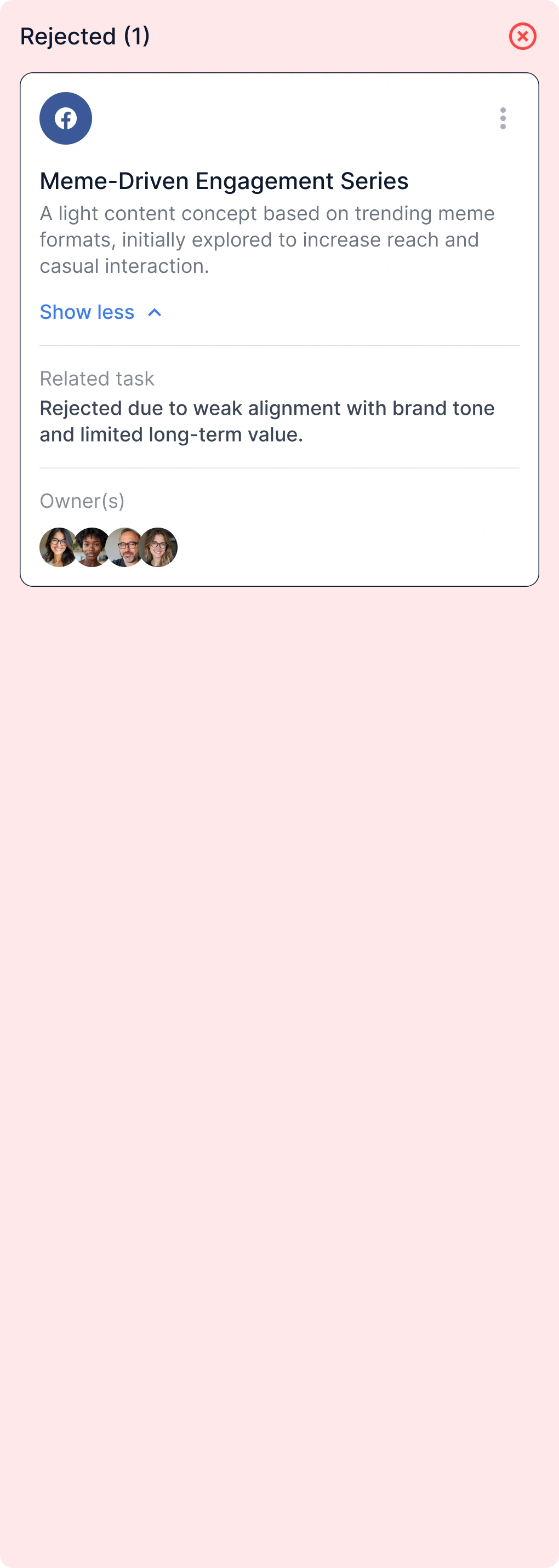
Every idea moves through review on the same board the work already lives on, so a client sees what is coming and nothing publishes without a decision anyone can trace back. A visible rejected column is uncomfortable, and that discomfort is the point.
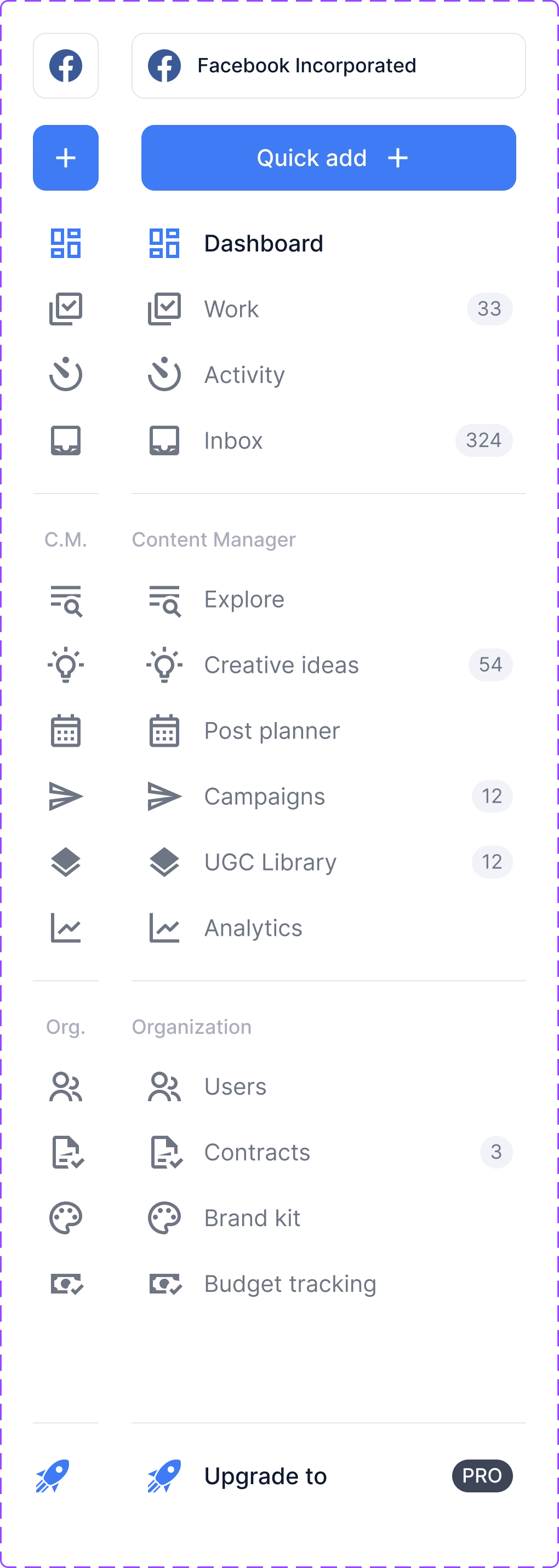
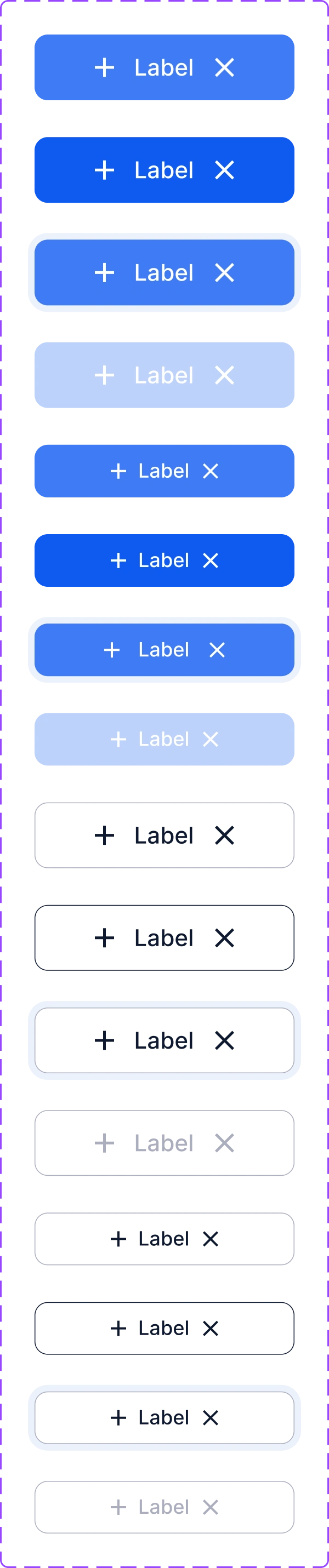
Navigation, cards, chips and every state they ship in, built once and shared with SimplyGaines, the sibling product, so the two read as one suite. A system costs weeks spent on components instead of screens, and only repays that if someone keeps it honest.
Results
SocialGaines is in development. The screens here are visual designs rather than shipped product; the figures describe the designed scope and the capacity it is built for, not live usage.
Component and channel counts come from the design itself; the posts-a-month figure is the load the planner was built to carry. Real usage figures will follow once the platform ships.


Reflection
Connected workflows and shared components give a team a clearer path from product idea to implementation.
Next, I would validate the content-planning module in everyday agency use before expanding the full suite. Observing one complete workflow would provide better evidence for the remaining modules.